Guide Topic
Smart Grid Integration And Battery Storage
Author & Reviewer
SerVilla Engineering & Editorial Team
Target Standards
Passive House, KfW 40, Minergie
Governing Code
Eurocode 3, Eurocode 8, ISO 9972
Last Updated
2026 Q3 / Güncel
Technical Guide & Comparison Benchmark

Smart Grid Integration, Battery Storage & Dynamic Tariffs | Passive Steel Homes

Comprehensive guide on steel frame energy efficiency, construction scope and technical standards.

Smart Grid Integration, Home Battery Storage & Dynamic Tariffs

A certified passive steel home is no longer merely a passive thermal shelter; it functions as an intelligent distributed generation, storage, and grid-stabilizing asset (Prosumer). The intrinsic temporal mismatch between solar PV yield and residential demand is bridged by lithium iron phosphate (LiFePO4) storage guided by Home Energy Management Systems (HEMS). Operating in full compliance with VDE-AR-N 4105 and EN 62619, SerVilla engineers electrical infrastructures capable of interfacing directly with dynamic hourly spot market tariffs, charging storage during low-cost or negative-price intervals and discharging during peak grid strain.

1. Energy Flux Thermodynamics & Self-Consumption Optimization

Without electrochemical storage, residential rooftop PV systems achieve only 25% to 35% direct self-consumption, exporting midday surpluses at low feed-in tariffs:

  • Storage-Coupled Self-Consumption: Integrating correctly sized LiFePO4 batteries elevates self-consumption to 75% to 90%.
  • Autarky Metrics: Elevates overall annual energy independence beyond 80%, substantially shielding homeowners from volatile grid charges and energy taxation.

2. LiFePO4 Electrochemical Chemistry & Safety: EN 62619

Fire containment inside structural envelopes requires ultra-stable cell chemistry:

  • Non-Cobalt Architecture: LiFePO4 (LFP) exhibits chemical stability far superior to nickel-manganese-cobalt (NMC) formulations. With an exothermic decomposition threshold exceeding T ≥ 270°C, thermal runaway risk is virtually eliminated.
  • Degradation Lifecycle: Delivers 6,000 to 8,000 equivalent full cycles at 80% Depth of Discharge (DoD), ensuring over 20 years of continuous daily operational cycling.

3. Dynamic Spot Pricing & Algorithmic Peak Shaving

Across European utility markets (EPEX Spot day-ahead clearing), hourly dynamic pricing is superseding flat-rate tariffs:

  • Negative Pricing Arbitrage: When grid-level wind and solar surpluses drive wholesale electricity prices negative, the HEMS automatically charges battery banks and activates heat pump domestic hot water buffers.
  • Peak Demand Shaving: Between 17:00 and 21:00, when standard grid power costs peak, the home seamlessly shifts its entire load to internal storage, reducing peak grid import to zero.
Performance Characteristic Standard Grid-Tied PV System LiFePO4 Battery Coupled Home Dynamic Tariff + V2H Ecosystem
PV Self-Consumption Rate 25% – 35% 75% – 85% 88% – 95%
Annual Grid Autarky Rate 30% – 40% 75% – 85% 85% – 92%
Effective Electricity Cost 0.38 € / kWh (Flat Tariff) 0.18 € / kWh 0.09 € / kWh (Optimized)
Grid Outage Behavior Immediate shutdown (Safety code) True 3-phase emergency backup Seamless microgrid + EV battery draw
Grid Ancillary Services None Peak load limitation Virtual Power Plant (VPP) ready

4. Vehicle-to-Home (V2H) Bidirectional Coupling

The average electric vehicle battery (60 – 100 kWh) contains sufficient energy to power a passive steel home for 5 to 8 consecutive days:

  • ISO 15118-20 Protocol: SerVilla pre-wires for high-power DC bidirectional wallboxes, allowing vehicle batteries to serve as primary residential reserve capacity.
  • Microgrid Islanding: When external grid loss occurs, certified automatic transfer switches isolate the home within 20 milliseconds, preserving heat pump operation, ventilation, and life safety circuits.
Editorial Disclosure & Engineering Note: Analysis presented in this guide reflects Eurocode structural benchmarks, Passive House Institute physics, and over two decades of SerVilla international cold-formed steel manufacturing experience. Custom statutory site verification is conducted for every individual plot.

Explore Other Technical Guides & Analysis

All Guides
Cold-Formed Steel Homes Guide Passive House Construction Guide Steel vs Timber vs Concrete Energy Standards Compared How to Compare House Quotes Energy Savings & Payback Pre-Order Permits & Documents Passive Slab & Foundation Guide MVHR Ventilation & Air Quality Acoustic Comfort & Soundproofing Solar PV & Net-Zero Living Fire Safety & Durability Smart Home & Automation Heat Pump Sizing & Selection Triple Glazing & RAL Fitting Airtightness & Blower Door Off-Site Prefab & Flat-Pack Green Mortgages & Subsidies Rainwater & Greywater Thermal Mass & PCM Materials Green Roofs & Facades Radon Protection & Barriers Embodied Carbon & LCA Extreme Climates & Alpine Seismic & Earthquake Resilience Hygrothermal & WUFI Modeling Summer Overheating & Passive Cooling Circular Economy & Material Passports Daylight Factor & Biophilic Design BIM, Digital Twin & Industry 4.0 BIPV & Solar Facades Air Quality & VOC Filtration Geothermal Heat Pumps & Boreholes Storm & Hurricane Resilience Water Efficiency & Smart Plumbing CFS Floor Acoustic Optimization Universal Design & Accessibility Thermal Break Balconies Off-Grid Autonomy & Resilience Urban Infill & Steel Extensions Passive House Cost Optimization Thermal Storage & Buffer Tanks EMF Shielding & Faraday Cage Wildfire Resilience & WUI Codes Pool Villa Dehumidification & Corrosion Smart Electrochromic Glazing Soil Improvement & Micropiles Hybrid Timber-Steel (CLT/CFS) Permafrost & Sub-Zero Foundations HVAC Attenuation & Silencers Brise-Soleil & Shading Aerodynamics Drain Water Heat Recovery (DWHR) Sustainable Drainage (SuDS) Cool Roofs & High Albedo Passive House Kitchen Exhaust Post-Occupancy Monitoring & IoT Coastal Corrosion & C5-M Durability Radiant Cooling & Dew-Point LEED & BREEAM Certification Explore All 60 Guides

Request a Project Comparison & Quotation

Compare steel frame versus timber or concrete for your site, including energy payback and delivery schedules.

Consult via WhatsApp

Explore Other Model Concepts

Compare alternative footprints, storey options and spatial arrangements.

Important Note: Veranda, garage, terrace, pool, BASEMENT FLOOR, etc. are NOT included in areas & PRICES. Semi-detached / twin models: 1 unit basis.
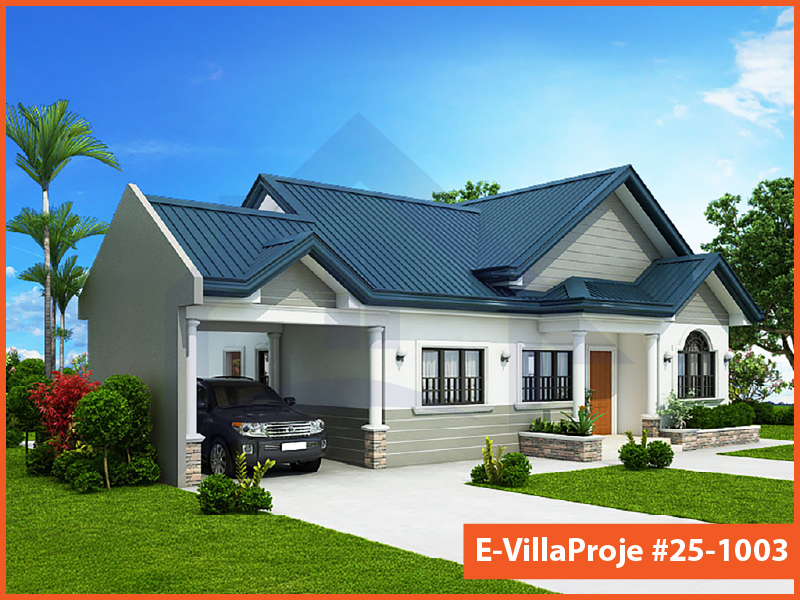
Model 25-1003 — 99 m², 1 storey
Model 25-1003 Farmhouse & Ranch

Model 25-1003 • 99 m²

Model 25-1003 — 99 m², 1 storey

1 Storey
2 Bedrooms
1 Garage
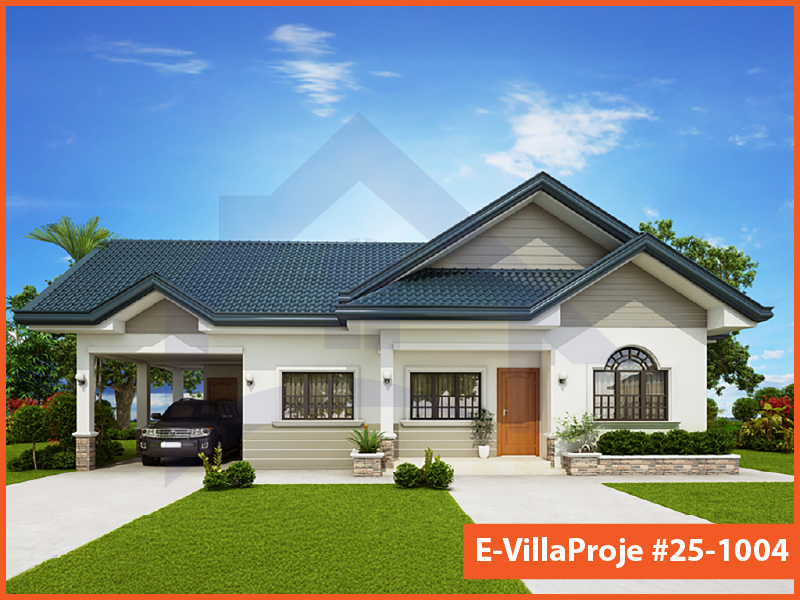
Model 25-1004 — 114 m², 1 storey
Model 25-1004 American Style

Model 25-1004 • 114 m²

Model 25-1004 — 114 m², 1 storey

1 Storey
3 Bedrooms
1 Garage
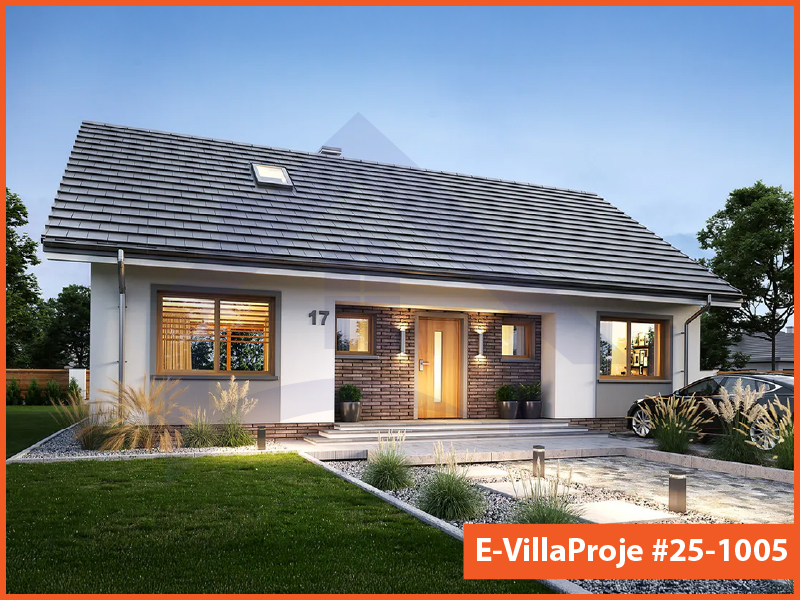
Model 25-1005 — 135 m², 1 storey

Model 25-1005 • 135 m²

Model 25-1005 — 135 m², 1 storey

1 Storey
3 Bedrooms
0 Garage

Frequently Asked Questions

Essential answers regarding steel construction, energy targets and project delivery.

No. These are architectural starting points. Certification is shown only when an applicable building certificate is available. Ask for a project-specific design and verification scope.

You can submit an enquiry about an existing design. Adaptation to steel construction, the site and the energy target is reviewed before manufacture.

The four material package definitions exclude foundation and excavation work. Local foundation design and construction must be assigned explicitly in the quotation.

No. Funding eligibility depends on the destination programme, applicant, project and application conditions. The responsible local specialist must check the current route.

The country list is an information guide. Transport, installation and local project support are confirmed for the individual destination and scope.

Timing depends on design completion, local permissions, procurement, manufacturing and site readiness. Ask for a dated programme with responsibilities and dependencies in the offer.

The applicable terms are stated in your contract and relevant product documents. Do not infer a project warranty period from a generic website or catalogue statement.

No. It prepares a message that you review and send in WhatsApp. You can also copy it and email SerVilla.

Request a Project Quote

Prepare your project brief and connect directly with the SerVilla engineering team via WhatsApp.

Direct connection with SerVilla engineering desk.
ℹ️ How it works: Clicking opens a pre-composed project brief in WhatsApp. You review and send it yourself. No payment or financial data is collected.
Chat on WhatsApp