Guide Topic
Post Occupancy Monitoring And Sensor Iot
Author & Reviewer
SerVilla Engineering & Editorial Team
Target Standards
Passive House, KfW 40, Minergie
Governing Code
Eurocode 3, Eurocode 8, ISO 9972
Last Updated
2026 Q3 / Güncel
Technical Guide & Comparison Benchmark

Post-Occupancy Evaluation (POE) & Continuous IoT Sensors | Passive Steel Homes

Comprehensive guide on steel frame energy efficiency, construction scope and technical standards.

Post-Occupancy Evaluation (POE) & IoT Sensor Architectures in CFS

Many residences certified as exemplary low-energy or Passive House dwellings on paper underperform during actual occupancy by 20% to 40% in primary energy consumption. Building science categorizes this discrepancy as the "Performance Gap", driven by sub-optimal mechanical balancing, occupant control override, and drift in heat pump calibration. Continuous Post-Occupancy Evaluation (POE) supported by industrial-grade Internet-of-Things (IoT) sensor arrays bridges this gap, establishing real-time feedback loops between indoor environmental quality (IEQ), sub-metered energy flows, and building envelope hygrothermal integrity. SerVilla equips cold-formed steel residences with cloud-synchronized analytics and digital-twin POE frameworks.

1. The Performance Gap & High-Granularity Telemetry

The variance between simulated energy expenditure (Edesign) and measured operational utility bills (Eactual) is defined as:

Δ Egap = Eactual - Edesign / Edesign × 100\%

To eliminate discrepancies, SerVilla integrates continuous multi-point sensing across three critical subsystems:

  1. Indoor Environmental Quality (IEQ): Multi-gas indoor pods track CO2 (dual-channel NDIR), Total Volatile Organic Compounds (TVOC), Particulate Matter (PM2.5 / PM10), and dew point.
  2. Sub-Circuit Electrical Disaggregation: Solid-core toroidal current transformers (CTs) log energy draws separately across the heat pump compressor, auxiliary DHW elements, MVHR blowers, and EV charging stations via Modbus RS-485.
  3. In-Wall Hygrothermal Telemetry: Miniature wireless embedded moisture sensors stationed at structural steel junctions and roof insulation interfaces track interstitial relative humidity and temperature.

2. Demand-Controlled Ventilation (DCV) Dynamics

Rather than operating ventilation on static time clocks, POE analytics enable dynamic Demand-Controlled Ventilation (DCV):

\dot{V}airflow = \dot{m}CO2 / Ctarget - Cambient

If occupancy rises during an evening gathering, driving salon CO2 past 850 ppm, the MVHR dynamically ramps fan velocity to restore baseline air quality. During work hours when suites sit unoccupied, airflow dials back to setback ventilation, reducing annual fan electrical consumption by up to 35%.

Telemetric Metric Sensor Modality & Code Protocol Passive House Target Datum Operational & Structural Value
Carbon Dioxide (CO2) Non-Dispersive Infrared (NDIR) ≤ 800 ppm Restorative sleep architecture; cognitive acuity
Total VOCs (TVOC) MOX Multi-Pixel Gas Sensor ≤ 250 μg/m³ Instant purging of off-gassing culinary or cleaning chemicals
Relative Humidity (RH) Thin-Film Capacitive Polymer 40% – 55% Complete elimination of dust mites, mold spores, and mucosal drying
Real-Time Heat Pump COP Ultrasonic Flowmeter + Dual RTD (PT1000) COP ≥ 4.5 Instant detection of refrigerant leaks or compressor calibration drift
Interstitial Wall Moisture Embedded High-Resistance Timber Pin < 65\% (sd safe band) Verifies zero condensation within the CFS framing cavity

3. Predictive Maintenance & Digital Twin Diagnostics

Logged data streams seamlessly into the villa's local building automation server and cloud digital twin:

  • Dynamic Filter Loading: Pressure drop transducers (Δ P) across MVHR filtration banks alert the homeowner precisely when F7 pollen filters require replacement, eliminating wasteful premature disposal or fan motor strain.
  • Autonomous Legionella Cycles: Hot water storage telemetry synchronizes weekly 60°C thermal anti-Legionella disinfection cycles exclusively with peak solar PV production hours, making sanitation 100% cost-free.
Editorial Disclosure & Engineering Note: Analysis presented in this guide reflects Eurocode structural benchmarks, Passive House Institute physics, and over two decades of SerVilla international cold-formed steel manufacturing experience. Custom statutory site verification is conducted for every individual plot.

Explore Other Technical Guides & Analysis

All Guides
Cold-Formed Steel Homes Guide Passive House Construction Guide Steel vs Timber vs Concrete Energy Standards Compared How to Compare House Quotes Energy Savings & Payback Pre-Order Permits & Documents Passive Slab & Foundation Guide MVHR Ventilation & Air Quality Acoustic Comfort & Soundproofing Solar PV & Net-Zero Living Fire Safety & Durability Smart Home & Automation Heat Pump Sizing & Selection Triple Glazing & RAL Fitting Airtightness & Blower Door Off-Site Prefab & Flat-Pack Green Mortgages & Subsidies Rainwater & Greywater Thermal Mass & PCM Materials Green Roofs & Facades Radon Protection & Barriers Embodied Carbon & LCA Extreme Climates & Alpine Seismic & Earthquake Resilience Hygrothermal & WUFI Modeling Summer Overheating & Passive Cooling Circular Economy & Material Passports Daylight Factor & Biophilic Design BIM, Digital Twin & Industry 4.0 BIPV & Solar Facades Air Quality & VOC Filtration Geothermal Heat Pumps & Boreholes Smart Grid & Battery Storage Storm & Hurricane Resilience Water Efficiency & Smart Plumbing CFS Floor Acoustic Optimization Universal Design & Accessibility Thermal Break Balconies Off-Grid Autonomy & Resilience Urban Infill & Steel Extensions Passive House Cost Optimization Thermal Storage & Buffer Tanks EMF Shielding & Faraday Cage Wildfire Resilience & WUI Codes Pool Villa Dehumidification & Corrosion Smart Electrochromic Glazing Soil Improvement & Micropiles Hybrid Timber-Steel (CLT/CFS) Permafrost & Sub-Zero Foundations HVAC Attenuation & Silencers Brise-Soleil & Shading Aerodynamics Drain Water Heat Recovery (DWHR) Sustainable Drainage (SuDS) Cool Roofs & High Albedo Passive House Kitchen Exhaust Coastal Corrosion & C5-M Durability Radiant Cooling & Dew-Point LEED & BREEAM Certification Explore All 60 Guides

Request a Project Comparison & Quotation

Compare steel frame versus timber or concrete for your site, including energy payback and delivery schedules.

Consult via WhatsApp

Explore Other Model Concepts

Compare alternative footprints, storey options and spatial arrangements.

Important Note: Veranda, garage, terrace, pool, BASEMENT FLOOR, etc. are NOT included in areas & PRICES. Semi-detached / twin models: 1 unit basis.
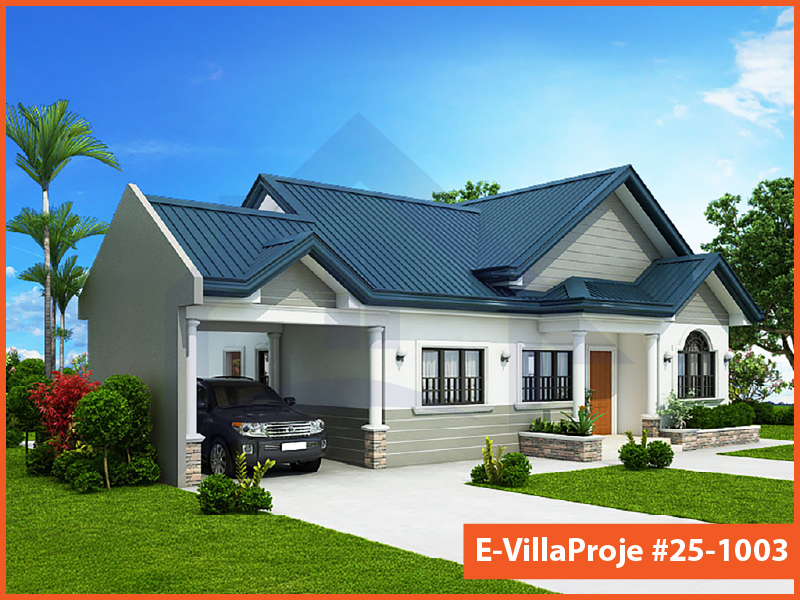
Model 25-1003 — 99 m², 1 storey
Model 25-1003 Farmhouse & Ranch

Model 25-1003 • 99 m²

Model 25-1003 — 99 m², 1 storey

1 Storey
2 Bedrooms
1 Garage
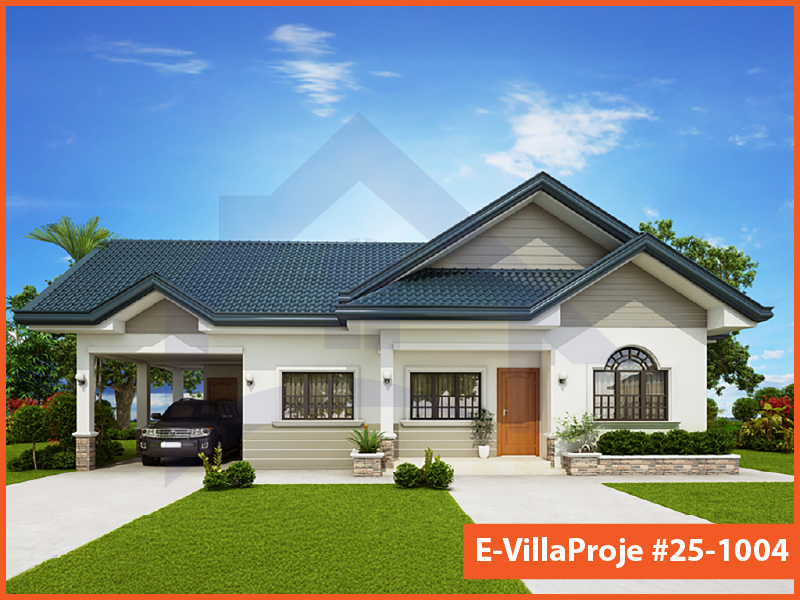
Model 25-1004 — 114 m², 1 storey
Model 25-1004 American Style

Model 25-1004 • 114 m²

Model 25-1004 — 114 m², 1 storey

1 Storey
3 Bedrooms
1 Garage
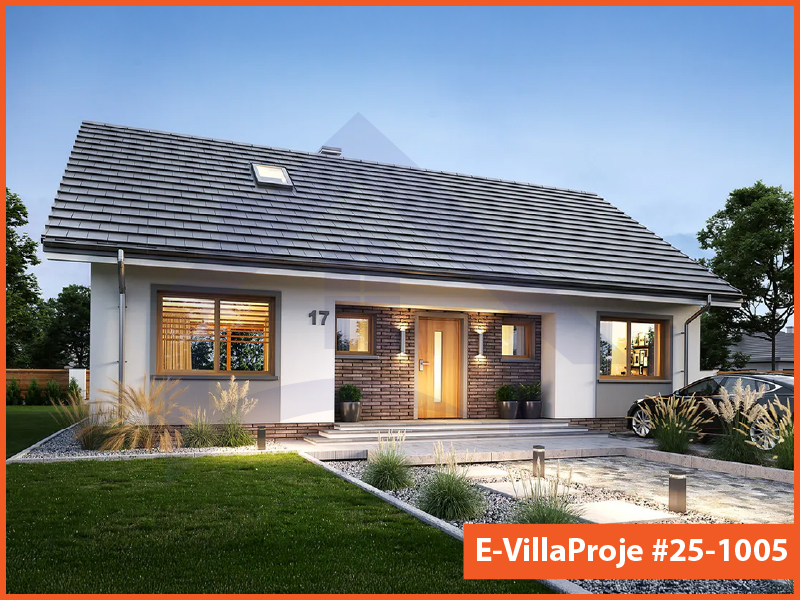
Model 25-1005 — 135 m², 1 storey

Model 25-1005 • 135 m²

Model 25-1005 — 135 m², 1 storey

1 Storey
3 Bedrooms
0 Garage

Frequently Asked Questions

Essential answers regarding steel construction, energy targets and project delivery.

No. These are architectural starting points. Certification is shown only when an applicable building certificate is available. Ask for a project-specific design and verification scope.

You can submit an enquiry about an existing design. Adaptation to steel construction, the site and the energy target is reviewed before manufacture.

The four material package definitions exclude foundation and excavation work. Local foundation design and construction must be assigned explicitly in the quotation.

No. Funding eligibility depends on the destination programme, applicant, project and application conditions. The responsible local specialist must check the current route.

The country list is an information guide. Transport, installation and local project support are confirmed for the individual destination and scope.

Timing depends on design completion, local permissions, procurement, manufacturing and site readiness. Ask for a dated programme with responsibilities and dependencies in the offer.

The applicable terms are stated in your contract and relevant product documents. Do not infer a project warranty period from a generic website or catalogue statement.

No. It prepares a message that you review and send in WhatsApp. You can also copy it and email SerVilla.

Request a Project Quote

Prepare your project brief and connect directly with the SerVilla engineering team via WhatsApp.

Direct connection with SerVilla engineering desk.
ℹ️ How it works: Clicking opens a pre-composed project brief in WhatsApp. You review and send it yourself. No payment or financial data is collected.
Chat on WhatsApp