Guide Topic
Passive House Kitchen Exhaust And Recirculation
Author & Reviewer
SerVilla Engineering & Editorial Team
Target Standards
Passive House, KfW 40, Minergie
Governing Code
Eurocode 3, Eurocode 8, ISO 9972
Last Updated
2026 Q3 / Güncel
Technical Guide & Comparison Benchmark

Passive House Kitchen Ventilation & Plasma Recirculation | Passive Steel Homes

Comprehensive guide on steel frame energy efficiency, construction scope and technical standards.

Passive House Kitchen Range Hoods & Plasma Recirculation Systems

In certified Passive House structures governed by extreme envelope airtightness (n50 ≤ 0.6 h⁻¹), conventional ducted kitchen range hoods are physically untenable. A standard ducted range hood exhausts 600 to 1,000 m³/h of conditioned interior air directly outdoors. In a hermetically sealed home, this massive exhaust creates dangerous negative depressurization (-50 to -100 Pa) within minutes, backdrafting toxic flue gases from fireplaces and blowing open envelope seals while puncturing a permanent hole in the thermal envelope. The high-performance Passive House solution relies upon closed-loop, advanced Cold Plasma Recirculation range hoods decoupled from the central MVHR system. SerVilla installs zero-energy-loss kitchen extraction systems engineered for pristine indoor air quality.

1. Enclosure Depressurization Mechanics & Thermal Penalty

In an airtight envelope, internal negative pressure (Δ P) driven by mechanical exhaust is expressed via the orifice equation:

Δ P = ≤ft(Vexhaust / C · Aleakage\right)1 / n

Where C is flow coefficient and n ≈ 0.65 the flow exponent. In a 200 m² home compliant with n50 = 0.4 h⁻¹, an 800 m³/h kitchen exhaust induces over 80 Pa of vacuum. Doors become difficult to open, and replacing this air with freezing exterior air requires up to 8 kW of instantaneous space heating.

2. Cold Plasma Oxidation & Molecular Scent Decomposition

Standard activated carbon filters saturate within months, releasing pungent cooking odors back into open-plan living areas. SerVilla integrates Cold Plasma Dielectric Barrier Discharge (DBD) reactors:

  1. Mechanical Grease Centrifugation: Stainless steel multi-stage baffle filters extract 98% of airborne cooking grease aerosols.
  2. Cold Plasma Ionization: Gaseous odor molecules pass across a high-voltage, micro-amperage plasma field. Oxygen molecules are split into ozone (O3) and hydroxyl free radicals (OH^-), initiating rapid cold combustion that oxidizes complex cooking hydrocarbons, amines, and sulfur compounds into benign water vapor (H2O) and carbon dioxide (CO2).
  3. Catalytic Carbon Regeneration: Downstream carbon blocks scrub residual traces of ozone and continuously self-cleanse, extending maintenance-free lifespans to 5-10 years.
Kitchen Extraction System Envelope Airtightness (n50) Odor Destruction Efficiency Annual Space Heat Loss Operational Safety & Reliability
Conventional Ducted Outdoor Hood Violates airtightness envelope 100% (Transferred outdoors) 400 – 700 kWh/year thermal penalty Backdraft vacuum hazard; grease fires in duct
Basic Charcoal Recirculating Hood Envelope safe 45% – 55% (Rapid saturation) 0 kWh Lingering frying odors; frequent filter expense
SerVilla Cold Plasma Closed-Loop 100% Airtightness compliant 95% – 98% (Molecular ionization) 0 kWh (Enthalpy retained) Absolute zero fire risk; 5+ year filter cycle
Make-Up Air Interlocked Damper Requires motorized fresh air vent 100% 350 – 500 kWh (Tempering incoming air) High mechanical complexity; sensor failure points

3. Kitchen Moisture Extraction via Smart MVHR Interlock

While plasma technology destroys odor molecules, culinary steam must be moderated. SerVilla positions an MVHR extract terminal equipped with an autonomous relative humidity sensor within the kitchen ceiling envelope, spaced 2 meters away from the cooktop. The moment cooking steam elevates localized humidity above 60% RH, the MVHR air handler ramps into boost ventilation mode, recovering latent enthalpy through its counter-flow heat exchanger without unbalancing building pressure.
Editorial Disclosure & Engineering Note: Analysis presented in this guide reflects Eurocode structural benchmarks, Passive House Institute physics, and over two decades of SerVilla international cold-formed steel manufacturing experience. Custom statutory site verification is conducted for every individual plot.

Explore Other Technical Guides & Analysis

All Guides
Cold-Formed Steel Homes Guide Passive House Construction Guide Steel vs Timber vs Concrete Energy Standards Compared How to Compare House Quotes Energy Savings & Payback Pre-Order Permits & Documents Passive Slab & Foundation Guide MVHR Ventilation & Air Quality Acoustic Comfort & Soundproofing Solar PV & Net-Zero Living Fire Safety & Durability Smart Home & Automation Heat Pump Sizing & Selection Triple Glazing & RAL Fitting Airtightness & Blower Door Off-Site Prefab & Flat-Pack Green Mortgages & Subsidies Rainwater & Greywater Thermal Mass & PCM Materials Green Roofs & Facades Radon Protection & Barriers Embodied Carbon & LCA Extreme Climates & Alpine Seismic & Earthquake Resilience Hygrothermal & WUFI Modeling Summer Overheating & Passive Cooling Circular Economy & Material Passports Daylight Factor & Biophilic Design BIM, Digital Twin & Industry 4.0 BIPV & Solar Facades Air Quality & VOC Filtration Geothermal Heat Pumps & Boreholes Smart Grid & Battery Storage Storm & Hurricane Resilience Water Efficiency & Smart Plumbing CFS Floor Acoustic Optimization Universal Design & Accessibility Thermal Break Balconies Off-Grid Autonomy & Resilience Urban Infill & Steel Extensions Passive House Cost Optimization Thermal Storage & Buffer Tanks EMF Shielding & Faraday Cage Wildfire Resilience & WUI Codes Pool Villa Dehumidification & Corrosion Smart Electrochromic Glazing Soil Improvement & Micropiles Hybrid Timber-Steel (CLT/CFS) Permafrost & Sub-Zero Foundations HVAC Attenuation & Silencers Brise-Soleil & Shading Aerodynamics Drain Water Heat Recovery (DWHR) Sustainable Drainage (SuDS) Cool Roofs & High Albedo Post-Occupancy Monitoring & IoT Coastal Corrosion & C5-M Durability Radiant Cooling & Dew-Point LEED & BREEAM Certification Explore All 60 Guides

Request a Project Comparison & Quotation

Compare steel frame versus timber or concrete for your site, including energy payback and delivery schedules.

Consult via WhatsApp

Explore Other Model Concepts

Compare alternative footprints, storey options and spatial arrangements.

Important Note: Veranda, garage, terrace, pool, BASEMENT FLOOR, etc. are NOT included in areas & PRICES. Semi-detached / twin models: 1 unit basis.
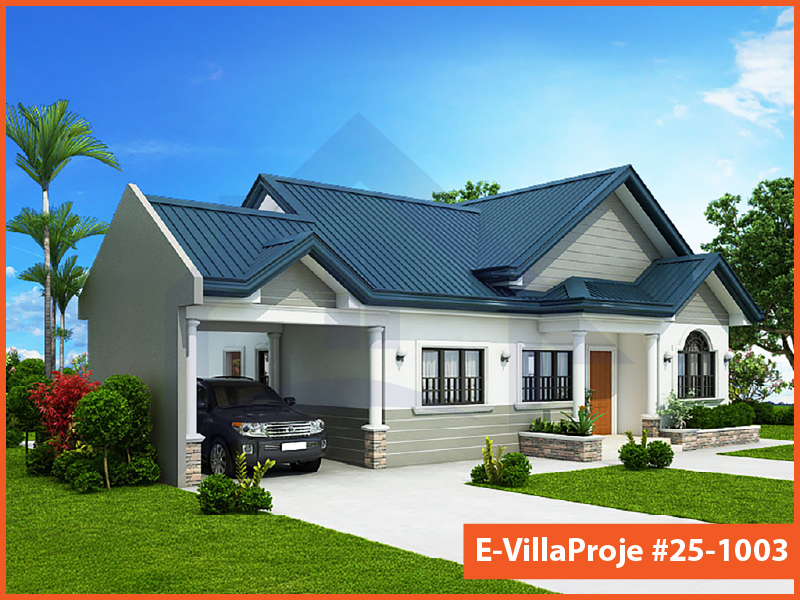
Model 25-1003 — 99 m², 1 storey
Model 25-1003 Farmhouse & Ranch

Model 25-1003 • 99 m²

Model 25-1003 — 99 m², 1 storey

1 Storey
2 Bedrooms
1 Garage
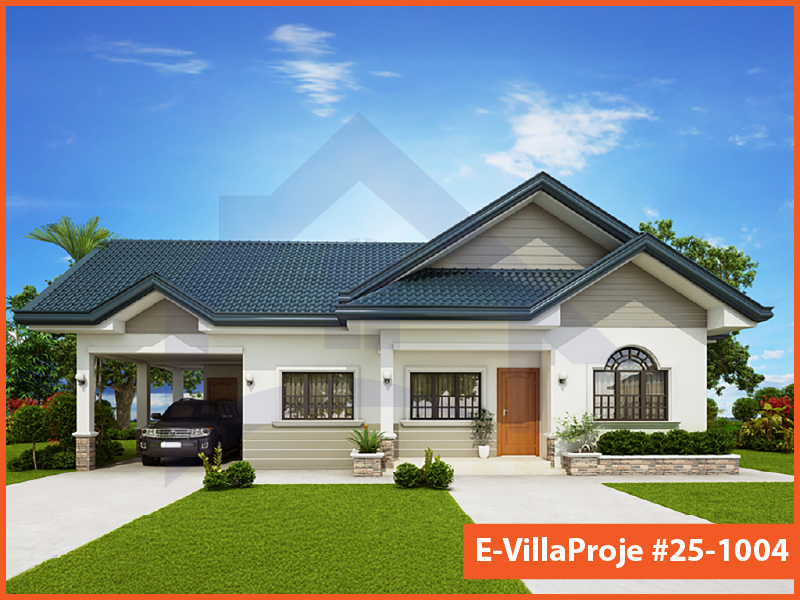
Model 25-1004 — 114 m², 1 storey
Model 25-1004 American Style

Model 25-1004 • 114 m²

Model 25-1004 — 114 m², 1 storey

1 Storey
3 Bedrooms
1 Garage
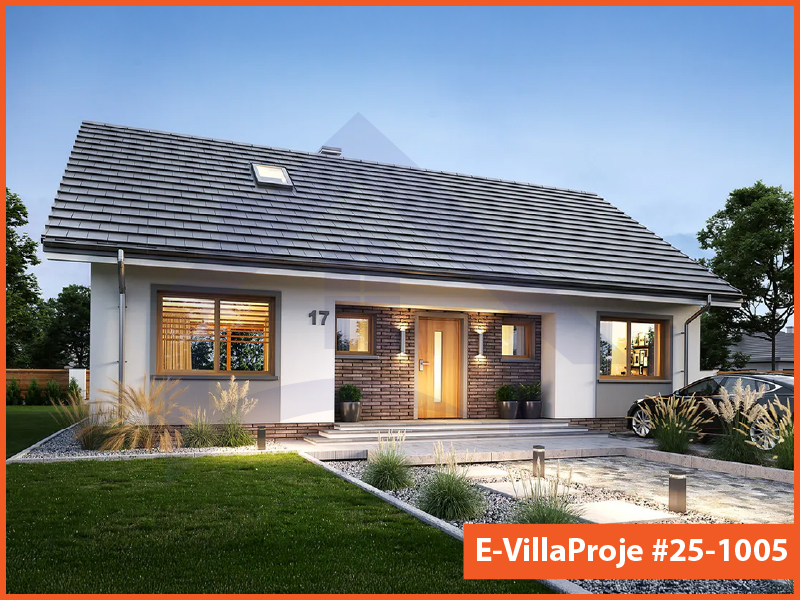
Model 25-1005 — 135 m², 1 storey

Model 25-1005 • 135 m²

Model 25-1005 — 135 m², 1 storey

1 Storey
3 Bedrooms
0 Garage

Frequently Asked Questions

Essential answers regarding steel construction, energy targets and project delivery.

No. These are architectural starting points. Certification is shown only when an applicable building certificate is available. Ask for a project-specific design and verification scope.

You can submit an enquiry about an existing design. Adaptation to steel construction, the site and the energy target is reviewed before manufacture.

The four material package definitions exclude foundation and excavation work. Local foundation design and construction must be assigned explicitly in the quotation.

No. Funding eligibility depends on the destination programme, applicant, project and application conditions. The responsible local specialist must check the current route.

The country list is an information guide. Transport, installation and local project support are confirmed for the individual destination and scope.

Timing depends on design completion, local permissions, procurement, manufacturing and site readiness. Ask for a dated programme with responsibilities and dependencies in the offer.

The applicable terms are stated in your contract and relevant product documents. Do not infer a project warranty period from a generic website or catalogue statement.

No. It prepares a message that you review and send in WhatsApp. You can also copy it and email SerVilla.

Request a Project Quote

Prepare your project brief and connect directly with the SerVilla engineering team via WhatsApp.

Direct connection with SerVilla engineering desk.
ℹ️ How it works: Clicking opens a pre-composed project brief in WhatsApp. You review and send it yourself. No payment or financial data is collected.
Chat on WhatsApp